

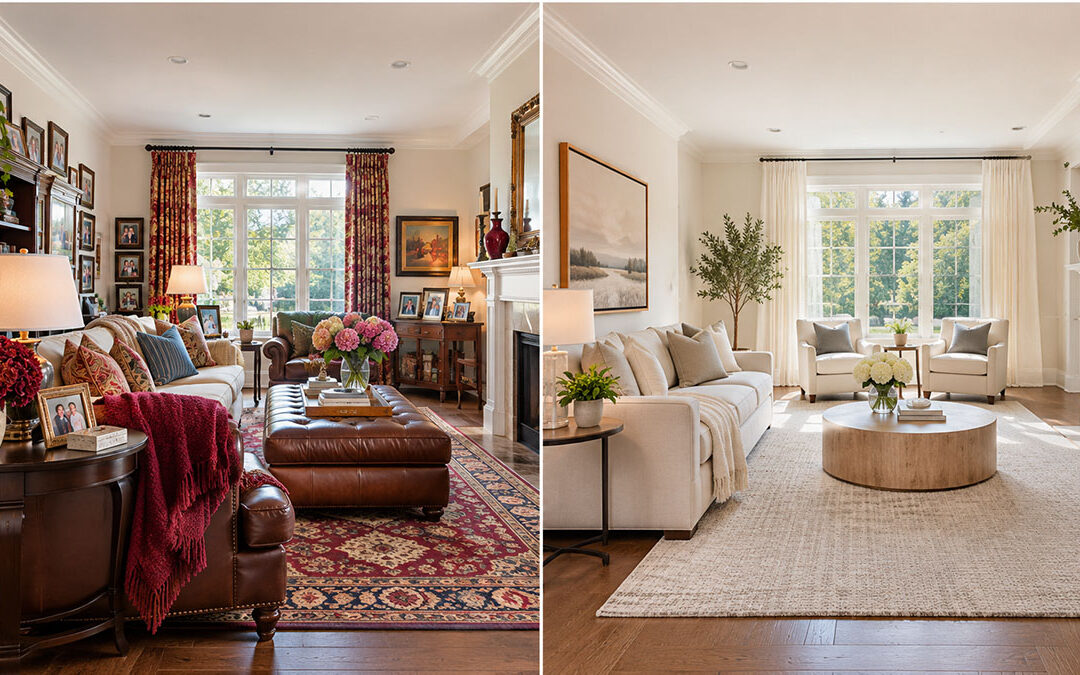
When it comes to selling a home, first impressions matter. A beautifully decorated house may feel warm, stylish, and inviting, but does that mean it will attract the right buyers?
Not necessarily.
Many homeowners assume that decorating and staging are the same thing. While both involve making a space look attractive, they serve two very different purposes.
Decorating is about making a home reflect your personality. Staging is about helping potential buyers imagine their future in that home.
Understanding this difference can make a significant impact when preparing your property for the real estate market.
What’s the Difference Between Staging and Decorating?
Decorating: Making a House Feel Like Your Home
Interior decorating is personal. It’s about choosing furniture, colors, artwork, and accessories that reflect your individual preferences and lifestyle.
Maybe you love bold accent walls, oversized furniture, colorful artwork, or a collection of family photographs. These details make your home unique and comfortable for you.
However, what appeals to one homeowner may not appeal to everyone.
When potential buyers walk through a property, highly personalized decorating can sometimes make it difficult for them to picture themselves living there.
Staging: Making a House Appeal to Buyers
Home staging takes a different approach.
Instead of focusing on the current homeowner’s preferences, staging highlights the property’s best features and creates an inviting environment for a broader audience.
Professional staging often involves:
- Removing clutter and personal belongings.
- Rearranging furniture to improve space and flow.
- Choosing neutral colors and complementary accessories.
- Maximizing natural light.
- Highlighting architectural features.
- Creating welcoming, functional living spaces.
The goal isn’t to make the house look like a magazine cover. It’s to help buyers see the home’s potential and imagine making it their own.
Why Home Staging Matters When Selling a House
Buying a home isn’t just a financial decision. It’s also an emotional experience.
When buyers enter a property, they’re often thinking about more than square footage, the number of bedrooms, or the size of the kitchen.
They’re imagining family gatherings in the living room, relaxing evenings in the bedroom, and everyday moments in a place they could call home.
A thoughtfully staged property makes that emotional connection easier.
According to the National Association of REALTORS® 2025 Profile of Home Staging, 83% of buyers’ agents said staging made it easier for buyers to visualize a property as their future home.
The same research found that some real estate professionals reported higher offers and shorter selling times for staged properties.
While staging doesn’t guarantee a faster sale or a higher price, it can help create a stronger first impression.
5 Home Staging Tips That Can Help Attract Buyers
You don’t always need an expensive redesign or professional staging company to make your property more appealing.
Sometimes, simple adjustments make a noticeable difference.
1. Declutter and Depersonalize
Remove unnecessary items from countertops, shelves, and living spaces. Consider packing away personal photographs, collections, and excessive decorations.
A clean, organized home helps buyers focus on the property rather than the belongings inside it.
2. Create a Neutral, Welcoming Environment
Bold colors can be beautiful, but neutral tones often appeal to a wider range of buyers.
Soft whites, warm beiges, light grays, and natural textures can help create a fresh, comfortable atmosphere without overwhelming a room.
3. Make Every Room Feel Spacious and Functional
Furniture placement can dramatically change how buyers perceive a room.
Avoid overcrowding spaces with oversized furniture. Arrange pieces to create comfortable walking paths and clearly demonstrate each room’s purpose.
A well-arranged living room can feel more open, while a thoughtfully staged bedroom can appear more relaxing and inviting.
4. Let Natural Light Work for You
Bright, airy rooms tend to photograph well and feel more welcoming.
Open curtains, clean windows, replace burned-out light bulbs, and use appropriate lighting to brighten darker areas.
Good lighting can make a home feel fresh, spacious, and inviting.
5. Focus on the Areas Buyers Notice Most
Not every room requires the same level of attention.
The living room, primary bedroom, and kitchen are particularly important when preparing a home for sale.
These are spaces where buyers often picture their everyday lives, making them worthwhile priorities when working with a limited budget.
Can Decorating Actually Hurt Your Home Sale?
Decorating itself isn’t a problem. In fact, tasteful furniture, attractive artwork, and coordinated accessories can make a property more appealing.
The challenge comes when personal style begins to compete with the home’s features.
For example, an oversized sectional may make a living room feel smaller than it really is. A bold wall color may distract from beautiful architectural details. Too many decorative accessories can make otherwise functional spaces feel crowded.
This doesn’t mean you need to remove every sign of personality.
It simply means that when you’re selling, the house should be the main attraction—not the decorations.
What Actually Sells Homes?
Home staging can influence how buyers perceive a property, but successful home sales depend on several important factors.
Competitive pricing, property condition, location, professional photography, effective marketing, and market demand all contribute to a home’s ability to attract serious buyers.
Staging supports these efforts by helping the property present itself in the best possible light.
Think of it this way:
Decorating makes a home beautiful for the people living in it. Staging makes a home appealing to the people considering buying it.
When these principles are combined with the right selling strategy, homeowners have a better opportunity to make a positive impression and generate buyer interest.
Final Thoughts: Stage to Sell, Decorate to Live
Your home may already be beautifully decorated, but preparing it for sale requires looking at it from a buyer’s perspective.
The furniture you love, the colors you selected, and the personal touches you’ve added may have made your house feel like home. But potential buyers need the freedom to imagine their own style, furniture, and memories within those walls.
That’s where home staging makes the difference.
You don’t need to completely transform your property. Sometimes, decluttering, rearranging furniture, improving lighting, and simplifying the décor are enough to make your home more inviting.
The secret to selling isn’t simply making your home look beautiful. It’s helping buyers see themselves living there.
Thinking About Selling Your Home?
Before investing in expensive decorating updates, consider what potential buyers will notice first. A real estate professional can help you identify which staging improvements are worth making, how to position your home competitively, and how to prepare it for the market.
The right presentation, combined with the right selling strategy, can help your property stand out.
Watch the related video: Staging vs Decorating – What Actually Sells Homes?
